
Studio Journal: Why I Stitch by Hand

In this journal entry I explore my relationship to handwork, the meaning behind the stitches and the stories held in cloth.
You can listen to this Studio Journal here:

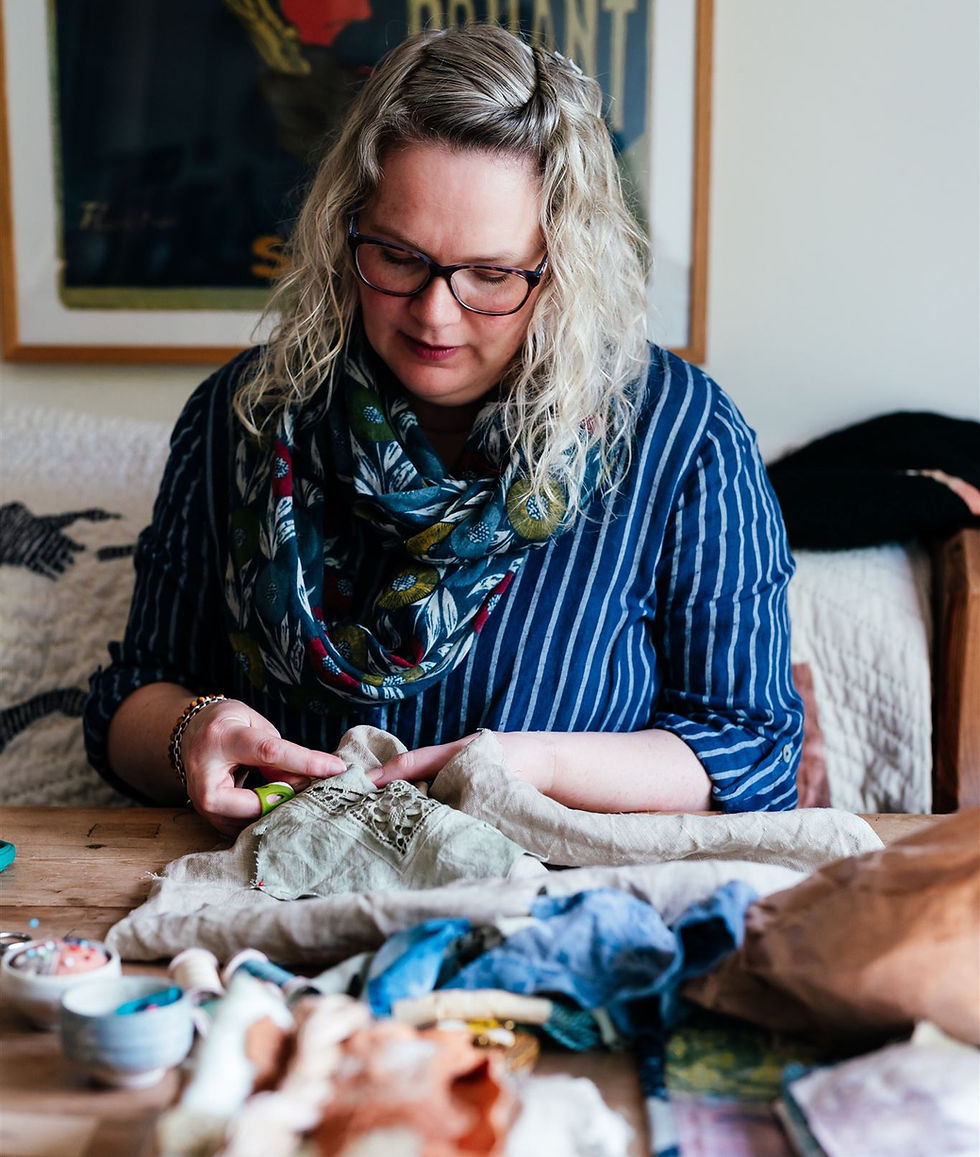
One of my earliest memories of making, is sitting with my mother, grandmother and sister with a handkerchief on my lap, adding stitches in bright, red thread. I remember the quiet of the room, the way the light fell from the window, and the feel of drawing the needle through the cloth. It wasn’t about the neatness of my stitches, or the quality of my first attempt (I managed to sew it to my skirt, but that’s another story), it was the fact that three generations of my family were working together, side by side, at the same task, using the same tools and materials, passing skills on. Skills that have stayed with me, ever since.
That moment shaped how I understand making by hand. I don’t choose handwork because it’s different to machine work, I choose it because it changes my relationship to what I’m stitching and to time itself.
Stitching by hand connects me to the history of sewing - I am using tools today that are not dissimilar to the tools used by our ancestors hundreds or even thousands of years ago. The basic running stitch, which I quilt with and come back to again and again for embroidery, would have been familiar then too. Cloth was joined and decorated through care and repetition, a rhythm held in the movement of fingers across generations and continents.
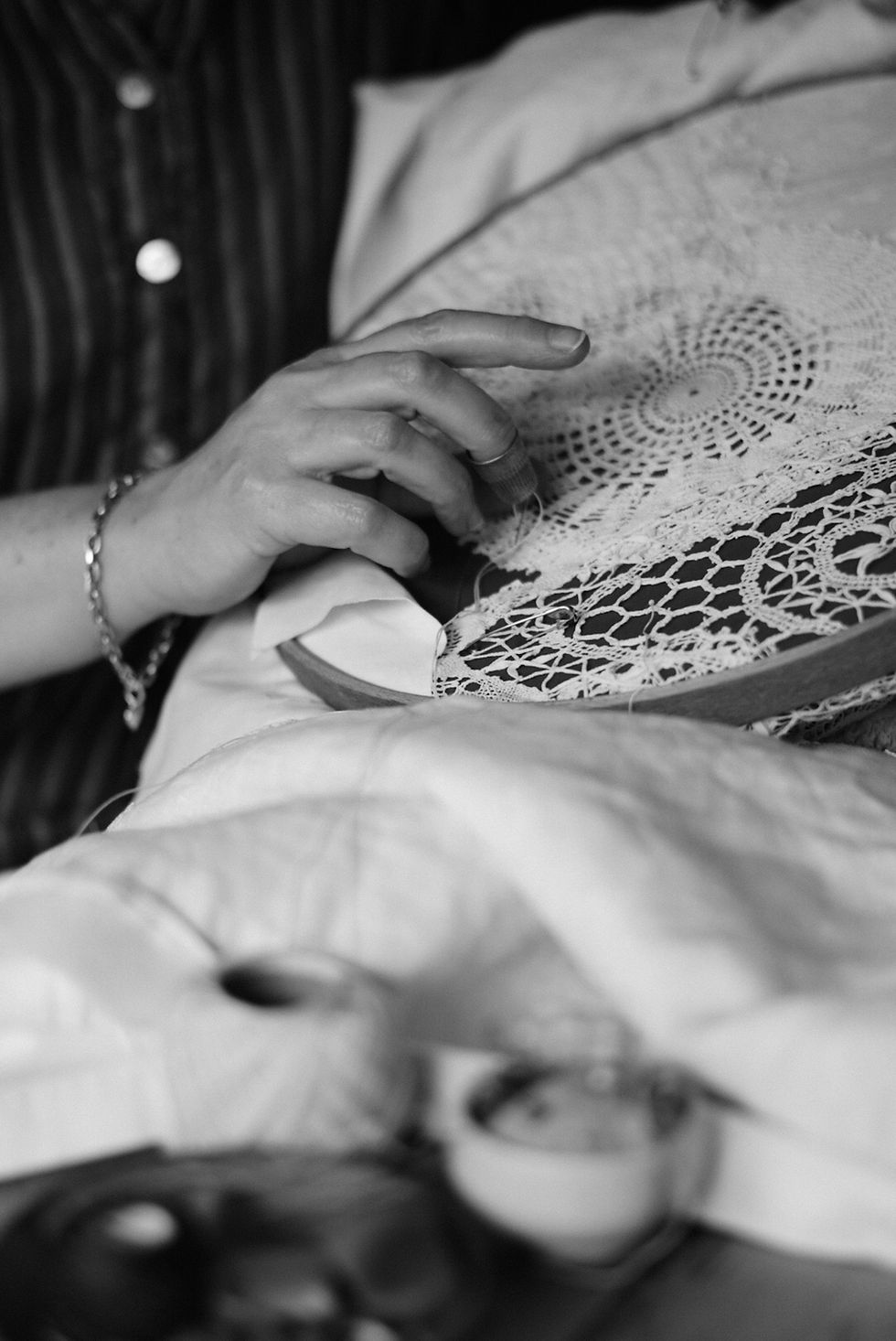
The act of sewing by hand can be both simple and exacting. My state of mind changes depending on what I am working on, whether that’s copying my handwriting by eye, quilting a marked-out design, or sewing a seam. Sometimes I can be fully present in the movement of the needle, and at other times I allow my mind to dream and plan. Both states are part of the process and both have their place in the finished work.
I do occasionally use a machine, but it serves a different purpose: it prioritises speed and completion. Instead, hand stitching follows a slower pace with my hands finding their own rhythm, and in that rhythm I become absorbed in the making itself.
When I work slowly, the material begins to influence the decisions I make. Vintage household linens carry their own stories in worn areas and markers of use, so I adjust my stitching in response. A tear is mended; a line of quilting follows a mark. As I sew, my breathing settles into the rhythm of the needle passing through cloth. The work is no longer planned entirely in advance, instead it develops through paying attention, layer by layer, process by process, until the piece is complete.

Repetition deepens this relationship. A single stitch is practical; hundreds of stitches tell a story. The repeated movement becomes almost like walking a path as the needle travels across the cloth, again and again, until the action itself holds memory. Much of my work is inspired by a person, a place or a moment, and those meanings are carried into the fabric through the choices I make whilst stitching. This is why handwork feels different. The marks not only create a pattern, they are also evidence of life.
This is what hand stitching leaves behind. It marks time and place. Each stitch shifts slightly depending on the materials chosen and the maker’s hand. Like handwriting, the techniques can be taught, but no two hands form a stitch in quite the same way. Instead, the finished work will carry the skill and decisions of the person who made it - a record of human presence held in cloth.
My work layers both time and meaning resulting into something deeply personal, so if you are considering a hand stitched artwork for your home, or would like to talk about a commission, you are very welcome to get in touch here.


Comments